Most lifters figure out the commercial gym problem the hard way. They spend two or three years grinding away at a 24 Hour Fitness or LA Fitness, make decent early progress, and then plateau — not because their programming failed, but because their environment did. No deadlift platforms. No specialty bars. Squat racks occupied by people doing curls. A staff that knows less about strength training than the average Reddit thread. Nowhere near what you need if powerlifting is actually the goal.
I’ve trained in commercial gyms. I know what it feels like to deadlift off rubber flooring that bounces the bar, to hit a heavy squat when the most aggressive “power rack” in the building is a Smith machine, to ask a personal trainer a technical question and get a blank stare. Then I trained in a real powerlifting facility — and I stopped thinking about going back.
The environment isn’t secondary to training. For a powerlifter, it is training. Here’s why.
The Equipment Gap Is Not Subtle
Walk into a commercial gym and then into a dedicated powerlifting gym on the same day, and the difference is immediate. It’s not about aesthetics — it’s about whether the tools you need actually exist.
Squat Equipment
A commercial gym might have two or three squat racks, usually shared with every other movement that requires a barbell. A powerlifting gym has dedicated squat stations and often a monolift — the competition-standard rack used in USAPL and IPF events. Training in a monolift is not the same as training in a J-hook rack. The walkout is different. The setup is different. If you’re going to compete on one, you should train on one.
Plates and Bars
This is where commercial gyms consistently fail strength athletes. Commercial gym plates are cheap cast iron with inconsistent sizing — a 45-lb plate at one gym is slightly larger or smaller than a 45-lb plate at another. Calibrated competition plates, manufactured to exact millimeter and kilogram tolerances, are the standard in sanctioned powerlifting. Training on calibrated plates means the bar height and total weight are exactly what you think they are. That matters when you’re selecting openers.
Competition-spec bars — with specific whip characteristics, knurling placement, and diameter — are different from the chrome bars at commercial gyms. An IPF-spec bar has knurling marks at specific positions to guide hand placement in the bench press. Getting used to those marks in training directly improves your competition setup.
Deadlift Platforms
Deadlifting off rubber flooring at a commercial gym is technically possible. It’s also inferior in every measurable way. Proper deadlift platforms have specific flooring with predictable compression. More importantly, most commercial gyms don’t want you dropping the bar — even with bumper plates — because the noise affects every machine user nearby. A powerlifting gym is built for this. You drop when you need to drop.
Specialty Bars
A good powerlifting gym stocks bars beyond the standard straight bar. The Safety Squat Bar (SSB) is one of the most valuable tools for building squat strength with reduced shoulder stress. Cambered bars, trap bars, and Swiss bars each serve specific programming functions. These bars don’t exist at commercial gyms. When your program calls for SSB good mornings or cambered bar squats — and if you’re running a serious program, it will — you need access to the right tools.
Atmosphere and Culture: Why Who You Train Around Matters
This is the factor people underestimate until they experience it. When you train around people who take powerlifting seriously, your training changes. Not because peer pressure forces you to lift more than you’re ready for, but because the collective focus and knowledge base in the room elevates the standard.
In a commercial gym, you’re surrounded by people doing everything: cardio, machine circuits, Instagram filming sessions, group fitness classes. The culture is broadly “fitness,” which means no one is particularly invested in what you’re doing.
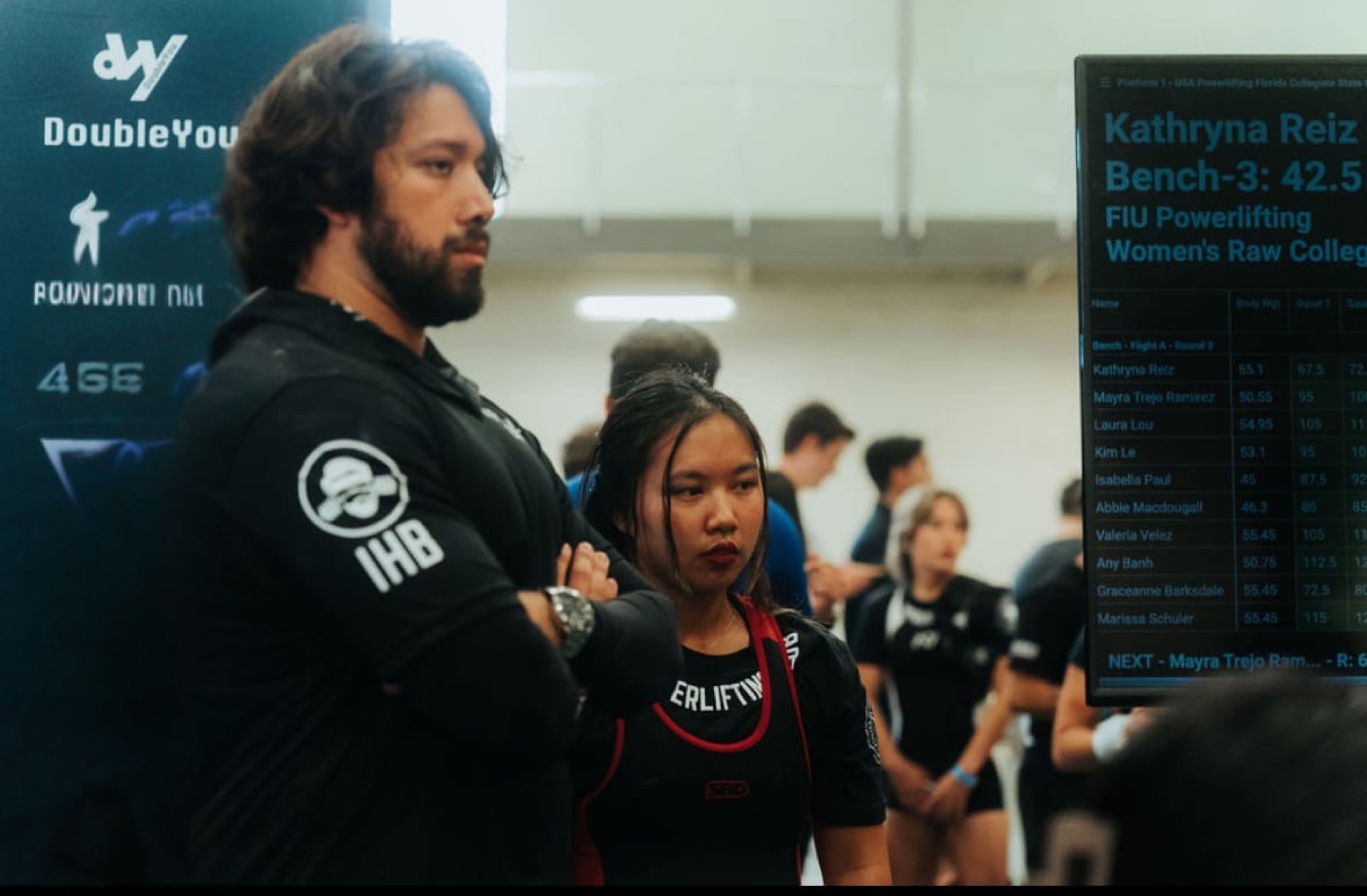
In a dedicated powerlifting gym, the culture is specific. People understand attempts and totals. They know what a red light means. When someone hits a big lift, the acknowledgment is genuine — because everyone in the room understands what it took. That creates accountability and focus that is genuinely hard to replicate elsewhere.
Training around other competitive powerlifters also provides something invaluable: informal technical feedback. An experienced lifter watching you squat might notice something about your knee tracking or your depth that you’ve never caught on video. That kind of environment-level coaching doesn’t exist in a commercial setting.
Coaching Accessibility: The Difference Is Fundamental
Let’s be direct about personal trainers at commercial gyms. Some are excellent. Most are certified to a basic level and trained primarily to deliver general fitness programming — fat loss, conditioning, general health. That is a legitimate service for a general fitness population.
It is not what a competitive powerlifter needs.
A certified USAPL coach brings something categorically different: specific technical knowledge of the squat, bench, and deadlift under competition standards; the ability to structure a peaking cycle around a competition date; the ability to watch a lift and diagnose exactly which technical fault is limiting performance; and real-world experience with drug-tested competition.
At In-Handsome Barbell, head coach Alvaro Calle holds a B.S. in Biomedical Engineering, a B.S. in Natural & Applied Sciences, is a NASM-CPT, and is a Certified USAPL Coach and Referee. He has competed himself and officiates meets. When he evaluates your squat depth, he’s applying the same standard a platform referee will apply — because he is one. That alignment is only possible when your coach operates inside the competitive system.
Programming: Commercial Gyms Offer Almost None
The standard commercial gym model: buy a membership, figure out your training on your own, or purchase individual personal training sessions. There is rarely any structured, periodized programming available as part of the membership.
For powerlifting specifically, this is a significant problem. Effective strength programming for competitive powerlifters involves periodization — the systematic organization of training stress over time to peak for a specific date. It requires managing fatigue, tracking training maxes, adjusting volume and intensity based on individual response, and building toward a competition total. Running a random program you found online is not the same as running a program built around your actual biomechanics, training history, and meet schedule.
A powerlifting gym with a serious coaching staff treats programming as part of what they offer. You don’t have to figure out your periodization by yourself.
What “Competition-Ready” Equipment Actually Means
The phrase gets used loosely. Here’s what it means in practice for a USAPL competitor:
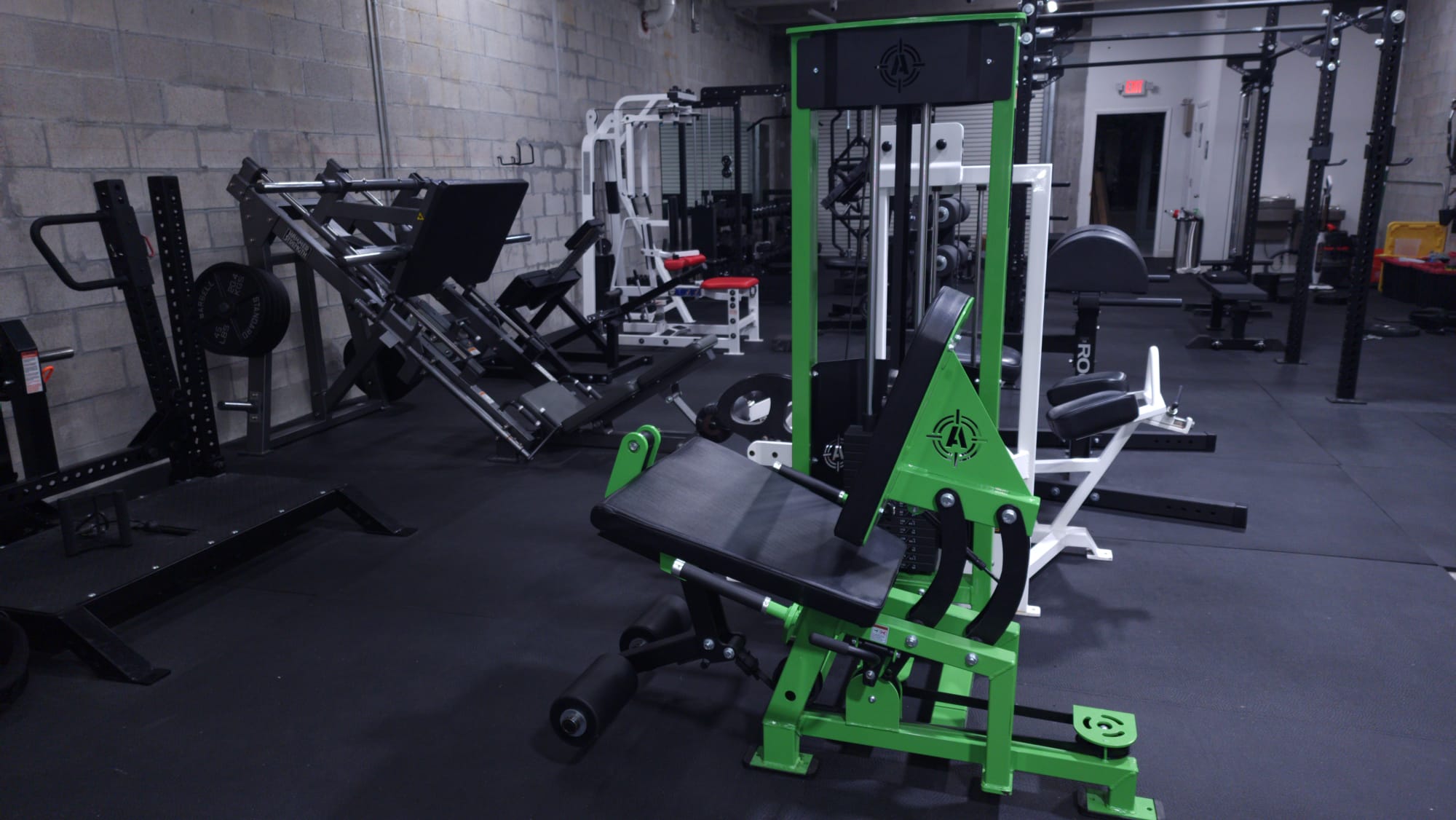
Competition-ready means the equipment in the gym matches the standards used at sanctioned meets. IPF-spec bars with correct knurling placement. Calibrated plates in standard kilogram denominations. Platforms that meet dimension and surface requirements. Equipment checks that mirror what a meet referee will look for.
Training on competition-ready equipment means there are no surprises on meet day. The bar feels the same. The plate heights are the same. The rack setup is the same. Commercial gyms cannot offer this because they are not built for competition — they’re built for general fitness.
At In-Handsome Barbell, our equipment is selected and maintained specifically for competitive powerlifters. You train on the same setup you’ll compete on.
The 24/7 Factor: Training on Your Schedule
Peak-hour crowding at commercial gyms is a real performance problem. 6:00–8:00 AM and 5:00–8:00 PM at any major commercial gym means 45-minute waits for a squat rack, interrupted rest periods, and an environment where a serious heavy training session is genuinely difficult to execute.
Powerlifting requires specific rest periods — particularly on compound movements, where 3–5 minutes between heavy sets is standard. It requires consistent rack access. It requires a level of concentration that is incompatible with a crowded, noisy gym floor.
Being open 24/7 isn’t a gimmick. For a powerlifter training five days a week, the ability to train at 10:00 PM on a Tuesday or 6:00 AM on a Saturday when no one else is there is a genuine training advantage. You train when you’re ready, not when the crowd thins out.
USAPL Affiliation: Why It Matters If You Compete
A Platinum USAPL affiliate isn’t just a label. It reflects a commitment to meeting the federation’s standards for equipment, coaching credentials, and facility quality. For an athlete competing in USAPL, training at an affiliated gym provides direct access to the federation pipeline — sanctioned meets, federation updates, connections to other USAPL athletes and coaches in the region.
It also means the coaching you receive is calibrated to what USAPL referees will actually judge. The depth standard, the command protocols, the equipment requirements — your coach knows them precisely because they operate within the federation.
In-Handsome Barbell is the only Platinum USAPL affiliate in Miami. If you’re training for USAPL competition in South Florida, this is where you train.
The Real Cost Comparison
Commercial gym memberships in Miami run $25–$80/month. Powerlifting-specific gyms tend to run higher — typically $80–$200/month depending on location and included services.
The honest comparison isn’t fee vs. fee. It’s: what does each dollar actually buy you?
At a commercial gym, $50/month buys you access to a large space with equipment that does not serve your specific training needs, no relevant programming support, no coaching for your sport, and a culture misaligned with your goals.
At In-Handsome Barbell, your $150/month (plus $75 annual fee) buys you competition-spec equipment, coaching from someone who competes and coaches in your federation, a community of serious athletes, and an environment built to produce the outcome you’re actually training for.
For athletes who are serious about powerlifting — not just lifting heavy as a hobby, but actually competing — the specialized gym is the higher-value option at almost every price point. The question isn’t whether you can afford it. It’s whether you can afford to keep training somewhere that isn’t built for your sport.
Train at Miami’s Only Platinum USAPL Facility
Stop sharing squat racks with people doing bicep curls. Stop deadlifting off bouncy rubber flooring at 6 PM surrounded by a crowd. Stop figuring out your programming on your own.
In-Handsome Barbell is Miami’s only Platinum USAPL affiliate — open 24/7, with competition-spec equipment, coached by a certified USAPL Coach and Referee.
Visit us or get in touch →
14900 SW 136th St Ste 103, Miami, FL 33186