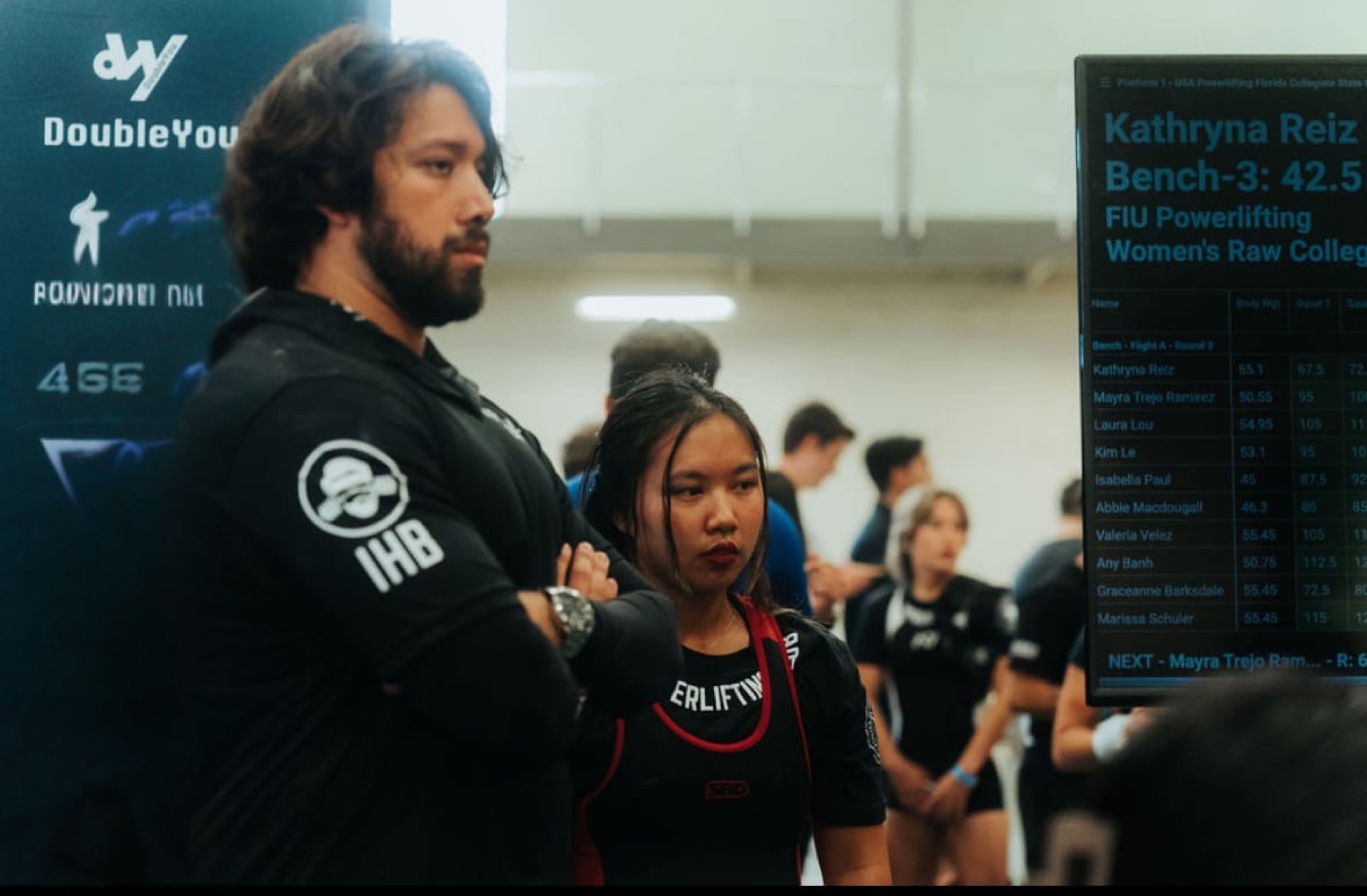
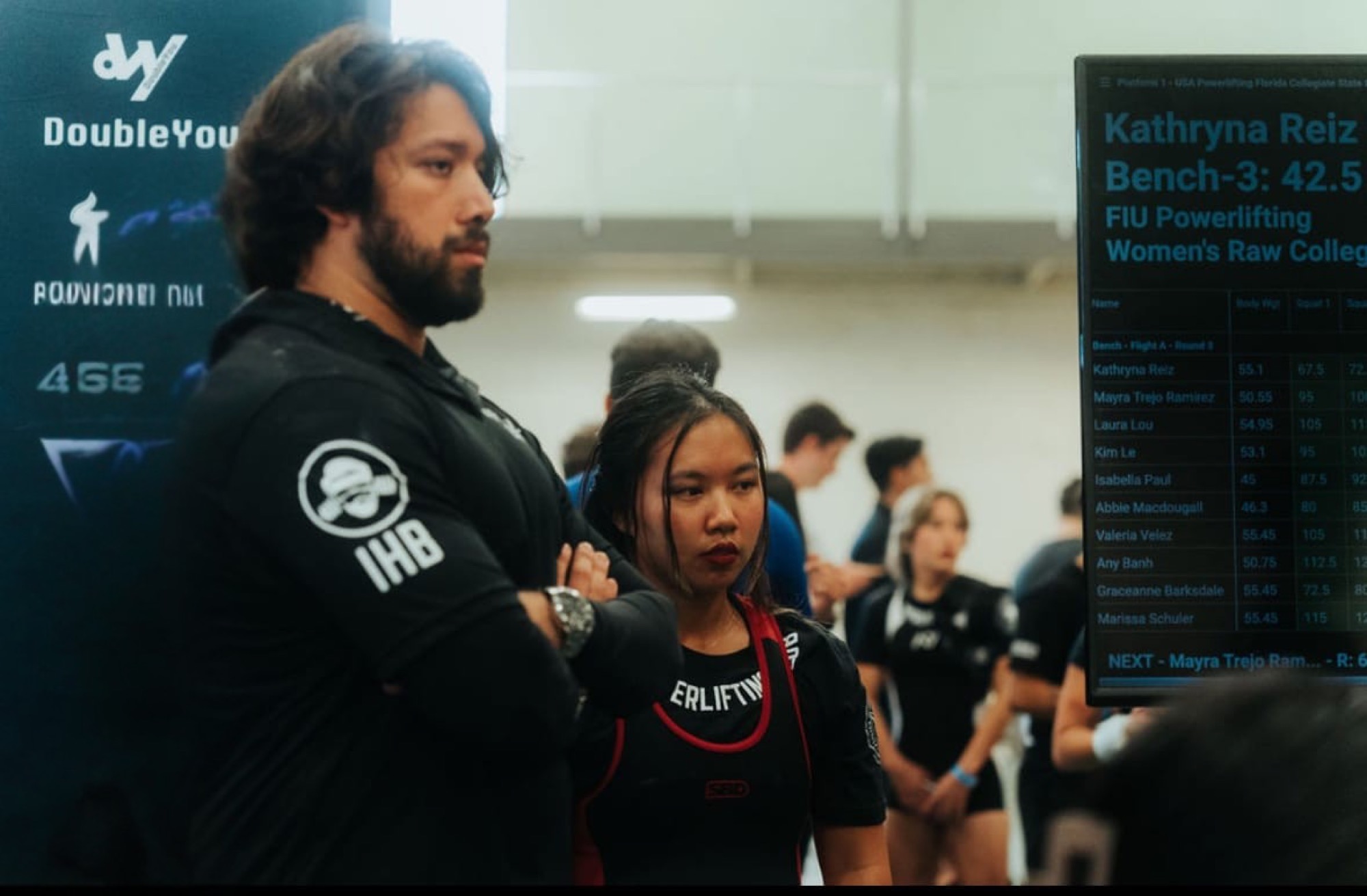
There’s a persistent assumption in strength sports that remote coaching is a consolation prize. Something you do when you can’t access a real coach. A compromise because you live in the wrong city or can’t afford in-person sessions every week.
That assumption is wrong.
Remote powerlifting coaching, executed properly, is not a downgrade. It’s a different delivery mechanism for the same thing: individualized, science-based programming with consistent technical feedback and structured meet preparation. The quality of the outcome depends entirely on the quality of the coach and the process — not on whether you’re in the same room.
I’m Alvaro Calle, head coach at In-Handsome Barbell in Miami. I hold a B.S. in Biomedical Engineering, NASM CPT certification, and I’m a certified USAPL Coach and Referee. I coach athletes both in person at our gym and remotely. This is a complete breakdown of what remote coaching actually looks like — so you can decide if it’s right for you.
The Misconception: Remote Equals Inferior
The skepticism usually goes like this: “How can a coach correct my form if they can’t see me in real time? How do I know the program is built for me and not just a template with my name on it?”
These are fair questions. And the honest answer is that bad remote coaching does exactly what the skeptic fears — generic spreadsheets, slow responses, copy-paste programs. That’s not coaching. That’s a product.
Good remote coaching solves both problems: video review closes the technique feedback loop, and individualization is built into the process from the first conversation. The proof is in outcomes: athletes coached remotely compete at national and international levels in powerlifting. The medium is not the limiter. The coach is.
What Remote Powerlifting Coaching Actually Includes
Here’s what you’re getting — and what you should demand from any program you consider.
Individualized Programming
Not a template. Not “Sheiko with your numbers plugged in.” A program built from scratch around your training age, competition schedule, recovery capacity, lift weaknesses, and life constraints. If you work rotating 12-hour shifts, your program needs to reflect that. If your squat is 40 kg behind your deadlift, your program needs to address that imbalance.
Weekly Check-Ins
Structured reviews of your training log — not casual check-in texts. What went up, what felt heavy, what you had to skip, what hurt. That data directly informs the adjustments to the following week. Remote coaching without consistent communication isn’t coaching.
Video Form Review
You send footage of your working sets after each session. I watch it frame by frame, and send back specific, actionable feedback within 24 hours. Not “keep your chest up” — that’s useless. Instead: “At the bottom of your squat, your torso is shifting forward because ankle mobility is limiting depth on the right side. Here’s a 4-week corrective protocol.”
That quality of feedback doesn’t require presence. It requires attention.
Meet Preparation
If you’re competing, your program includes a structured peaking block, attempt selection strategy, and meet-day warm-up protocols. I’ve coached remote athletes through USAPL national-level meets. The logistics are manageable when they’re planned carefully in advance.
Who Remote Coaching Is Right For
Remote strength coaching isn’t for everyone. Here’s who it genuinely serves well.
Lifters Outside Miami
The most obvious use case. If there’s no qualified USAPL coach within reasonable distance, remote coaching closes the gap entirely. You train at your local gym. I program and coach you. Geography becomes irrelevant.
Busy Professionals and Parents
Fixed training sessions with a coach require a shared calendar. Remote coaching gives you structure without that constraint. You train when you can train. I review your sessions asynchronously.
Frequent Travelers
Some of my remote athletes travel 15+ days a month. Their training environments are unpredictable — hotel gyms, variable equipment. Good remote programming accounts for this. Travel weeks have modified protocols that don’t require calibrated plates or a specific rack setup.
Intermediate Lifters Who’ve Plateaued
If you’ve been training for 2–3+ years and your total has stalled, the most common cause is one of three things: programming stopped progressing, technique has a ceiling you can’t see from the inside, or volume and recovery aren’t balanced. Remote coaching addresses all three. This is actually where remote coaching often delivers its biggest ROI — the athlete has the self-awareness to execute the program, but was missing the outside eye.
The Programming Process: How Science-Based Programs Are Built
This is where the Biomedical Engineering background matters in a real, applied way.
Strength development is a systems problem. The human body responding to a training stimulus involves multiple biological systems interacting simultaneously: hormonal response, neuromuscular adaptation, connective tissue loading and recovery, sleep, cortisol, nutrition timing. These systems don’t operate in isolation. They interact — and a program that ignores those interactions consistently underperforms.
When I build an individualized strength program, I’m modeling those interactions. For example: a lifter who is pushing high squat volume and also running recreational miles on weekends is not recovering the same way as one who isn’t. A program that ignores that cross-stressor relationship will fall short of its potential. Accounting for it — even just by adjusting intensity in the days following additional stressors — produces measurably better results.
The intake process for a new remote athlete:
- Detailed intake form — Training history, current lifts, injury history, competition schedule, lifestyle (sleep, stress, occupation, other physical activity), equipment access, and goals
- Video submission — Current footage on all three lifts from multiple angles for a baseline technical assessment
- Intake consultation — 30–60 minutes to walk through the above and align on realistic short- and long-term targets
- Block 1 delivery — First 4–6 week training block with session-by-session detail and coaching notes
From there, the program evolves every block based on how the athlete is responding. It’s not a document — it’s a living process.
Video Review and Form Feedback: How It Works in Practice
The mechanics are straightforward. After each training session (or at minimum after each heavy working set day), the athlete uploads short video clips — phone camera from the side and slightly behind works well. I watch them, annotate where needed, and send back written or voice-note feedback within 24 hours.
What makes this effective is specificity. Here are examples of actual remote form feedback:
-
“On set 3 of your squats today, you’re losing tension at the bottom — the bar drifts slightly forward on the concentric. This is a bracing issue, not a strength issue. Add 2 sets of paused squats at 60% after your main work this week. 3-second pause at the bottom. That will train the position.”
-
“Your bench press bar path is arcing too far toward your face on the descent. Lower it to the lower chest and actively engage your lats throughout the movement. Watch how this changes your lockout consistency over the next two sessions.”
Over weeks and months, this feedback loop builds. The athlete develops better proprioception. The corrections stack. Technique improves — not as fast as daily in-person coaching, but consistently and measurably.
Meet Prep: Peaking Remotely for USAPL Competition
Peaking for a powerlifting competition is a specific, structured process. It’s not “lifting heavy for a few weeks.” It involves tapering volume while maintaining or increasing intensity, managing fatigue so the athlete arrives at meet day recovered but sharp, and dialing in attempt selection.
For remote athletes, this process starts 10–12 weeks out from the competition. The final training block is fully periodized around the meet date:
- Weeks 10–5: Volume-focused hypertrophy and technique refinement
- Weeks 4–2: Intensity phase — heavier singles and doubles, volume drops
- Week of meet: Minimal work, moderate singles to stay sharp without accumulating fatigue
- Meet day: Warm-up timing coordinated around the flight order; openers selected conservatively
Openers are chosen as something the athlete has hit comfortably in training for multiple sets. Second and third attempts are decided in real time based on how the opener felt and how the athlete looks on the platform. I’m available on meet day — we communicate between attempts.
Remote vs. In-Person: The Honest Comparison
I’m not going to oversell remote coaching. Here’s the real comparison.
In-person coaching is better for: real-time technical correction, athlete accountability for certain personalities, and the intangibles of training culture — energy, training partners, the environment of a specialized facility.
Remote coaching is better for: schedule flexibility, geographic accessibility, and coaches athletes who’ve already developed a training baseline but need programming expertise.
Where they’re equal: meet preparation quality, long-term total progression, and the ability to develop technically once the video feedback loop is established.
If you’re in Miami, I’ll always suggest training in person at In-Handsome Barbell first. The 24/7 access, competition-spec equipment, and training culture here are genuine advantages. But if you’re not here, remote coaching is not a compromise — it’s a legitimate path to the same outcomes.
What to Look for in a Remote Powerlifting Coach
Not all online coaching is created equal. Before you invest, ask:
What are their credentials? A USAPL-certified coach has passed formal education and examination in the federation system. A general personal trainer certification alone is not sufficient for sport-specific powerlifting coaching.
Do they compete or have they competed? A coach who has been on the platform brings context no certification can replicate.
How do they communicate? Get clarity on response times before you pay. Weekly check-ins? 24-hour form feedback turnaround? These should be defined, not vague.
Can they show athlete outcomes? Not Instagram highlights — actual competition results, total progressions, meet performance. That’s the measure.
Apply for Remote Coaching at In-Handsome Barbell
Remote coaching through In-Handsome Barbell includes individualized block programming, weekly check-ins, video form review with 24-hour feedback, and full meet prep support. Every program is built from scratch.
Apply for remote coaching here →
If you have questions before applying, reach out directly. Every inquiry gets a personal response.
If you’re in Miami, we’re at 14900 SW 136th St, Ste 103 — open 24/7. Membership is $150/month + $75 annual fee. Come lift.