Most strength programs in circulation are built on two foundations: tradition (“this is how strong lifters trained in the 80s”) and trial and error with no systematic analysis of what’s actually working. Neither is inherently useless — experienced coaches build intuition over decades that is genuinely valuable. But intuition without a framework for understanding why something works is fragile. It doesn’t generalize. It can’t be efficiently adapted to an individual. And it tends to produce athletes who are strong in spite of their program rather than because of it.
I studied biomedical engineering and natural sciences before I became a powerlifting coach. That background changed how I look at every exercise, every program variable, every athlete in front of me. Strength training isn’t mystical — it’s applied biology and physics. The lifters who make the best long-term progress are the ones whose programs reflect that reality.
What Biomechanics Actually Tells Us About the Big Three
Biomechanics is the study of mechanical laws applied to living organisms. When applied to the squat, bench press, and deadlift, it gives us a rigorous framework for understanding why a given technique works or fails for a given body.
Lever Arms and Moment Arms
Every joint that rotates during a lift creates a moment — a rotational force. The moment arm is the perpendicular distance between the joint’s axis of rotation and the line of force (the bar path). The longer the moment arm, the greater the torque demand on the muscles crossing that joint.
In the squat: a lifter with a shorter torso and longer femurs will necessarily have a more horizontal torso, creating a larger hip moment arm and placing greater demand on the spinal erectors and hip extensors. A lifter with longer torso and shorter femurs can stay more upright, reducing that demand. Neither position is “wrong” — they’re a direct consequence of anatomy. But they require different technical cues, different accessory work, and different stance widths.
This is why copy-pasting technique cues from a video of a six-foot lifter onto a 5’5“ lifter is biomechanically incoherent. The lever systems are different.
In the bench press: bar path, grip width, and wrist position all interact to determine the moment arm at the shoulder and elbow. A wider grip shortens range of motion but increases shoulder stress. A closer grip increases tricep demand. Individual shoulder width, arm length, and thoracic mobility all determine the optimal configuration for a specific athlete.
In the deadlift: the goal is to keep the bar as close to the body as possible throughout the pull, minimizing the horizontal distance between the bar and the lumbar spine — the critical moment arm in the lift. How much hip hinge versus knee bend is appropriate in the setup depends directly on limb proportions. A lifter with long legs and a short torso has a very different ideal starting position than a lifter with the opposite.
Bar Path
Optimal bar path in all three lifts is not perfectly vertical in every case — it’s the path that minimizes total mechanical work while maintaining structural integrity at the joints involved. The “straight up and down” cue is a simplification that works for many athletes but breaks down at the extremes of body proportion. Understanding this requires basic vector mechanics. It’s also why technique is individual and not universal.
Understanding these principles is not academic. It’s the difference between programming a squat that fights an athlete’s anatomy and one that works with it.
How Biomedical Engineering Changes the Coaching Approach
My undergraduate training in biomedical engineering built a specific problem-solving framework: define the system, identify the variables, form a hypothesis, test it, adjust. It is fundamentally empirical — it doesn’t default to tradition when data is available.
Applied to strength programming, this means:
Diagnosing the actual limiter. When an athlete misses a squat out of the hole, most coaches add more squat volume. I first ask: is this a quad strength deficit, a fatigue issue, a technique breakdown, or a mobility limitation? Each answer produces a different intervention. Guessing and adding volume is the blunt instrument. Diagnosing the specific system failure is the engineering approach.
Tracking the right variables. Not just training maxes and volume totals, but bar speed at different intensities, technical consistency under load, recovery markers, sleep quality, and life stress. Strength expression on a given day is a function of multiple variables. A program that ignores most of them is a poor model of the system.
Updating based on evidence, not ego. When a programming decision isn’t producing the expected adaptation, you change the decision. This requires that the decisions were explicit enough to evaluate in the first place — which means writing things down, tracking outcomes, and being willing to be wrong.
Periodization: What It Is and Why It Works
Periodization is the organized variation of training stress over time to produce specific physiological adaptations and peak performance at a predetermined date. It is not a fad — it’s a well-documented phenomenon in sports science and a practical necessity for anyone competing in a strength sport.
Linear Periodization
The oldest model: gradually increase intensity while decreasing volume over a training cycle.
- Week 1: 4×8 at 70%
- Week 6: 4×3 at 88%
Simple, effective, and appropriate for beginners because the magnitude of early adaptation is large enough that novelty of stimulus is sufficient. Linear progression works until it doesn’t — typically within the first 12–18 months of serious training.
Daily Undulating Periodization (DUP)
Instead of progressing week to week, DUP varies intensity and rep ranges within each week:
- Monday: 4×6 at 75% (hypertrophy focus)
- Wednesday: 5×3 at 85% (strength focus)
- Friday: 6×2 at 90% (peaking focus)
The advantage is simultaneous development of multiple strength qualities — hypertrophy, maximal strength, and neural efficiency — which becomes important as an intermediate lifter’s window of weekly adaptation narrows. DUP is also more psychologically sustainable for athletes who find monotonous linear progressions tedious.
Block Periodization
Training is divided into distinct blocks, each with a specific physiological target:
- Accumulation block: High volume, moderate intensity. Goal: hypertrophy and work capacity.
- Intensification block: Reduced volume, higher intensity. Goal: building strength expression on the muscle mass built in accumulation.
- Realization (Peaking) block: Very low volume, very high intensity. Goal: expressing maximum strength on the competition platform.
Block periodization is well-suited to competitive powerlifters because it provides a logical structure from the base of training to competition day. Each block has a specific purpose. The progression between blocks is deliberate.
The “correct” model depends on the athlete’s training age, competitive schedule, recovery capacity, and structural needs. No one periodization scheme is universally superior — they’re tools with specific applications.
The SRA Curve: The Most Important Concept Most Lifters Ignore
The Stimulus-Recovery-Adaptation (SRA) curve is one of the most important and most frequently ignored concepts in strength programming.
When you apply a training stress — a hard squat session, a heavy deadlift pull — three things happen in sequence:
- Stimulus: Mechanical and metabolic stress is applied. Performance is temporarily reduced.
- Recovery: The body clears fatigue and returns to baseline.
- Adaptation: Structural and neural changes occur, and performance rises above the previous baseline — this is supercompensation.
The training session that occurs at the peak of the adaptation curve produces the most productive stimulus. Too soon (before full recovery) and you’re training into accumulated fatigue. Too late (after supercompensation peaks) and you miss the window and regress toward baseline.
Different movements and energy systems have different SRA timelines. Large compound movements involving the central nervous system — heavy squats and deadlifts — have longer SRA curves than isolation work. A maximal deadlift session may require 48–72 hours before the next heavy exposure is productive. A light accessory session — banded pull-aparts, face pulls — recovers in hours.
Programming that ignores SRA produces either accumulated fatigue (too frequent, too heavy) or wasted training time (too infrequent, insufficient stimulus). Understanding the curve is necessary to place the right stress at the right frequency.
Why Most Programs Fail Intermediate Lifters
Beginners can make progress on almost any program. The adaptation margin is large. Add volume, add weight, get stronger. Simple.
Intermediate lifters — roughly 1–3 years of serious training, no longer able to add weight every session — require a more sophisticated approach. Here’s where most template programs fall apart:
They don’t account for individual recovery. A 25-year-old with low stress, 8 hours of sleep, and optimal nutrition recovers differently than a 35-year-old with a demanding job, a family, and 6 hours of sleep. The same program produces different outcomes in different bodies under different life circumstances.
They treat all exercises as equivalent. A 5×5 program that treats the squat, bench, and deadlift identically ignores that the deadlift is categorically more taxing on the CNS per unit of volume than the squat or bench for most athletes.
They provide no mechanism for adjustment. A fixed template with no decision rules for when to deload, when to reduce intensity, or when to add volume is fragile. Real training is messier than a spreadsheet.
They prioritize volume over specificity as the lifter advances. At an intermediate level, specificity — practicing the competition lifts at competition intensities — becomes progressively more important. Programs that keep an intermediate doing high-rep accessory work at the expense of heavy competition movements are not serving their actual goals.
Individualization: Why Body Proportions Change Your Program
Two athletes with identical training histories, identical maxes, and identical recovery capacity might still need different programs because their body proportions are different.
Femur length: Longer femurs change squat mechanics fundamentally. They require a wider stance, more forward lean, and more hip extensor work in accessory programming. A standard “quad-dominant” squat template is biomechanically inappropriate for many long-femur athletes.
Arm length: Longer arms provide a mechanical advantage in the deadlift by reducing the range of motion. Shorter arms disadvantage the bench press by extending the range. These structural differences affect where the limiting factor lies — and therefore what accessory work addresses the actual weakness.
Torso length: A longer torso generally aids squat mechanics (more upright position possible) but can create challenges in bench setup. These are real, measurable anatomical variables.
Training history: An athlete with years of training a particular movement pattern has developed specific motor programs and structural adaptations. Building on existing strength patterns is usually more efficient than trying to overhaul established mechanics from scratch.
A program built without considering these variables is a generic template, not a coaching product.
Nutrition Science for Strength Athletes
The fundamentals are simpler than the supplement industry wants you to believe.
Protein Synthesis
Muscle protein synthesis — the biological process of building muscle tissue — requires sufficient dietary protein. Current evidence supports 1.6–2.2 grams of protein per kilogram of bodyweight per day for strength athletes. The upper end is appropriate during aggressive training blocks. Complete proteins (containing all essential amino acids) are most efficient.
Protein timing has a modest effect: distributing protein across 3–5 meals throughout the day appears to maximize the synthetic response compared to consuming the same total in one or two large feedings.
Energy Balance
To build muscle mass and improve your total, you need a caloric surplus — consuming more energy than you expend. The magnitude does not need to be dramatic. A surplus of 200–400 calories per day is sufficient to support muscle protein synthesis without excessive fat accumulation.
Carbohydrates are the primary fuel source for high-intensity training. Depleting glycogen through low-carbohydrate intake while training maximally is a physiological contradiction. Carbohydrates are not the enemy of strength athletes — they’re the fuel the engine runs on.
Recovery Science: What Actually Moves the Needle
The adaptation from training does not happen in the gym. It happens during recovery. The gym is where you apply the stimulus. Everything outside the gym determines how effectively your body responds.
Sleep
This is the most important recovery variable, and the one most athletes consistently underprioritize. Sleep is when the majority of growth hormone is released, when tissue repair occurs, and when motor patterns are consolidated neurologically. Research consistently shows that sleep restriction — even chronic mild restriction at 6 hours per night — significantly impairs strength expression, recovery rate, and body composition. 8+ hours per night is the target for serious athletes. Not aspirational — the actual target.
Stress and Cortisol
Cortisol is a catabolic hormone released in response to stress — both physical (training) and psychological (work, relationships, financial pressure). Chronically elevated cortisol impairs recovery, inhibits protein synthesis, and suppresses testosterone. This is why a lifter under significant life stress may respond poorly to a training volume that was manageable during a lower-stress period.
Total allostatic load — cumulative stress from all sources — affects recovery, not just training stress in isolation. This is not an excuse to avoid hard training when life is difficult. It is a reason to adjust programming variables intelligently when life circumstances change.
HRV as a Recovery Metric
Heart rate variability (HRV) — the variation in time intervals between heartbeats — is a reasonable, objective proxy for autonomic nervous system recovery. Higher-than-baseline HRV suggests readiness to train. Lower-than-baseline HRV suggests incomplete recovery. Using a HRV-tracking tool (Whoop, Garmin, Polar) as one input for daily training decisions is an evidence-backed practice. It provides objective data that supplements subjective feel — especially valuable for athletes who tend to overtrain or who have difficulty honestly assessing their own readiness.
Get a Science-Based Program from Alvaro at In-Handsome Barbell
Most powerlifting programs are not built on the principles described here. They’re built on tradition, borrowed structure from famous lifters, or generic templates designed for a different body with different goals.
If you want a program built on biomechanical analysis, evidence-based periodization, appropriate fatigue management, and genuine individualization — that’s exactly what In-Handsome Barbell offers. Every program starts with your leverages, your training history, your competition timeline, and your life schedule.
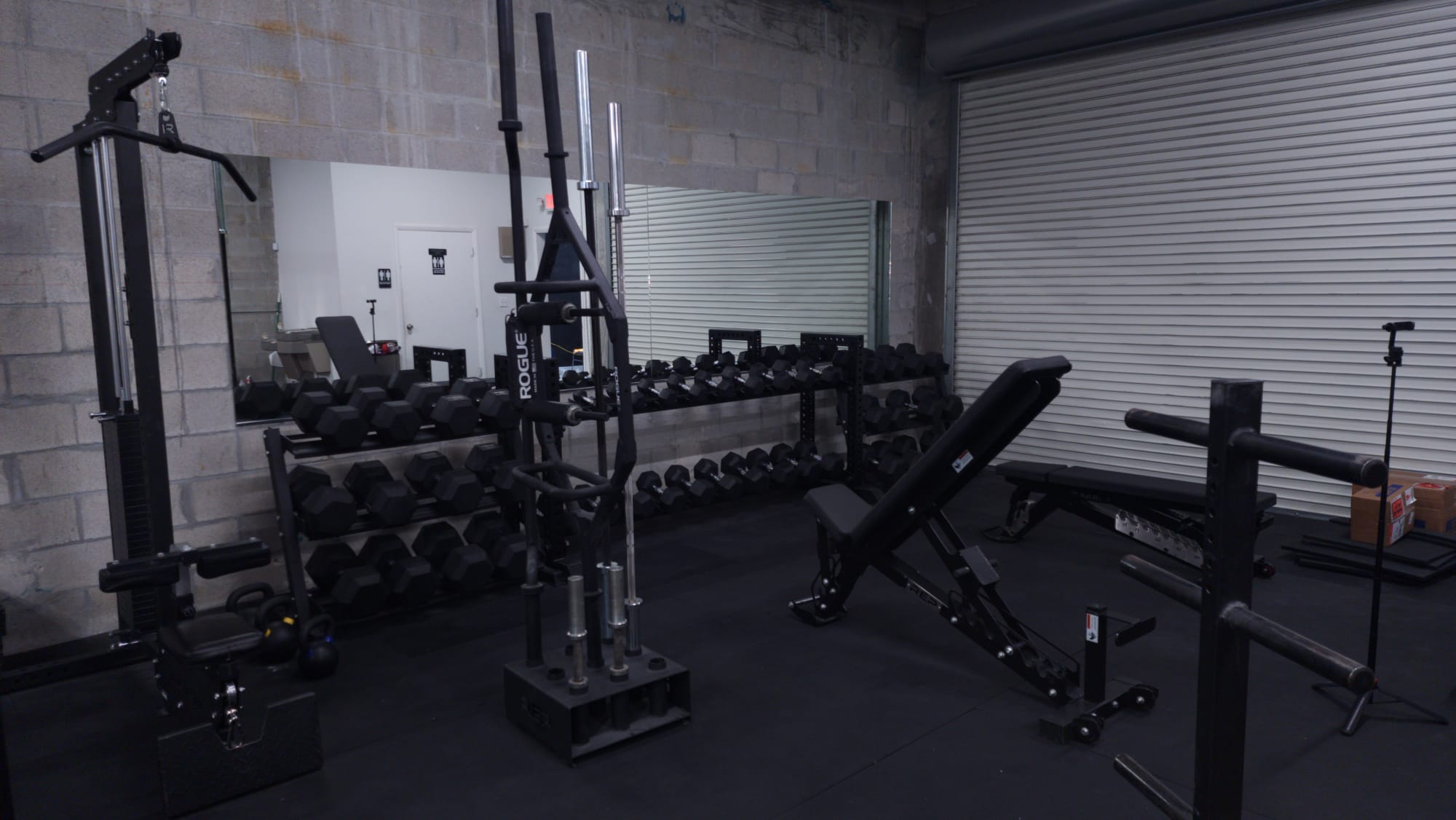
We’re open 24/7 with competition-spec equipment and no peak-hour crowding.
Apply for coaching or inquire about membership →
In-Handsome Barbell | 14900 SW 136th St Ste 103, Miami, FL 33186
Stop guessing. Start training with a program that actually understands the science.